Managing Uncertainty in AI
A Comprehensive Guide to Challenges and Solutions

The rapidly evolving landscape of artificial intelligence brings unprecedented capabilities alongside complex challenges in managing uncertainty. Modern organizations implementing AI systems must navigate multifaceted uncertainties while ensuring reliable ethical and effective outcomes.
Key Takeaways
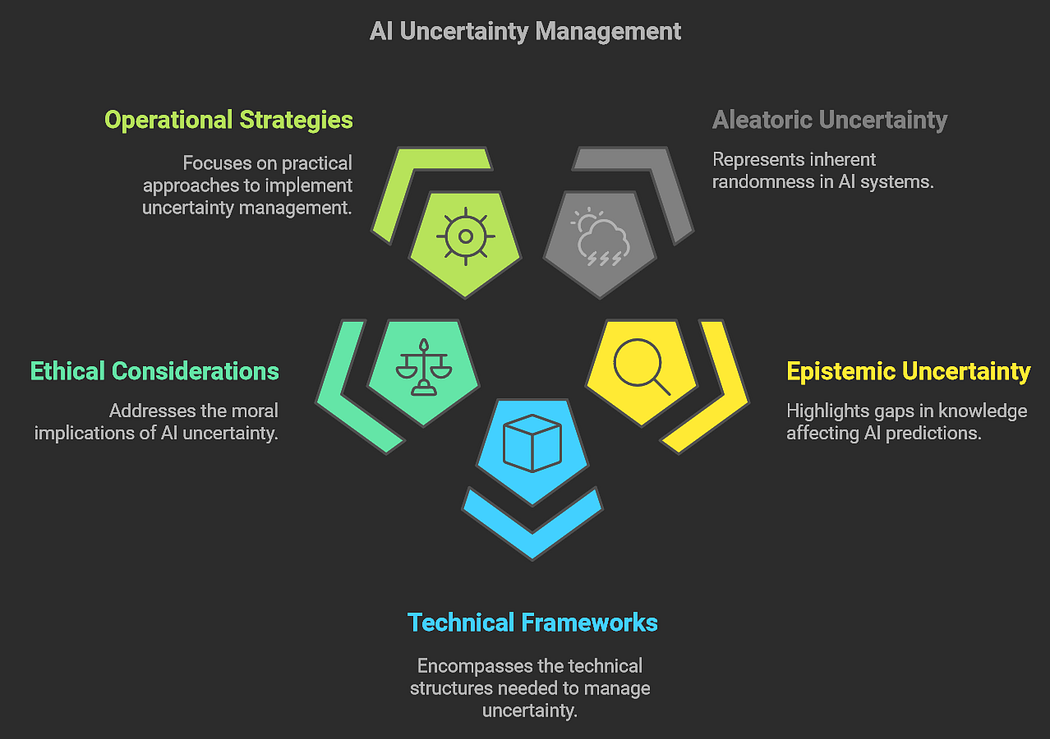
Uncertainty in AI manifests through aleatoric (inherent randomness) and epistemic (knowledge gaps) dimensions
Managing AI uncertainty requires robust frameworks spanning technical, ethical and operational domains
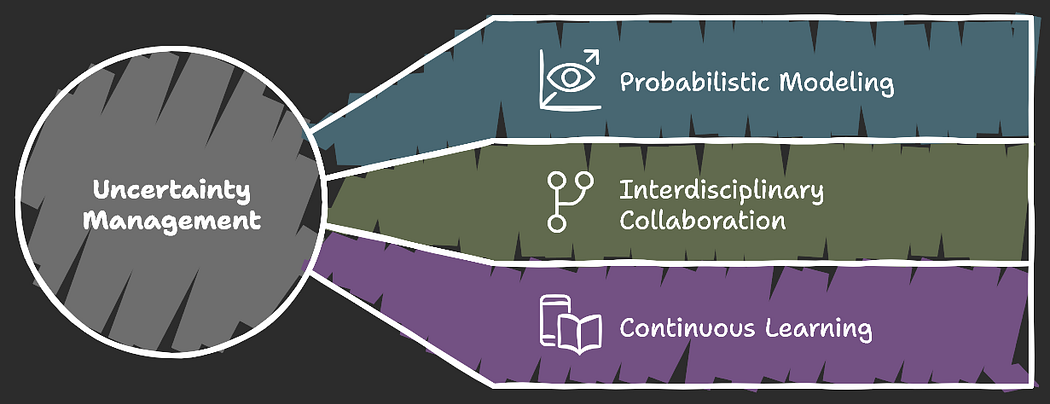
Effective uncertainty management strategies combine probabilistic modeling interdisciplinary collaboration and continuous learning
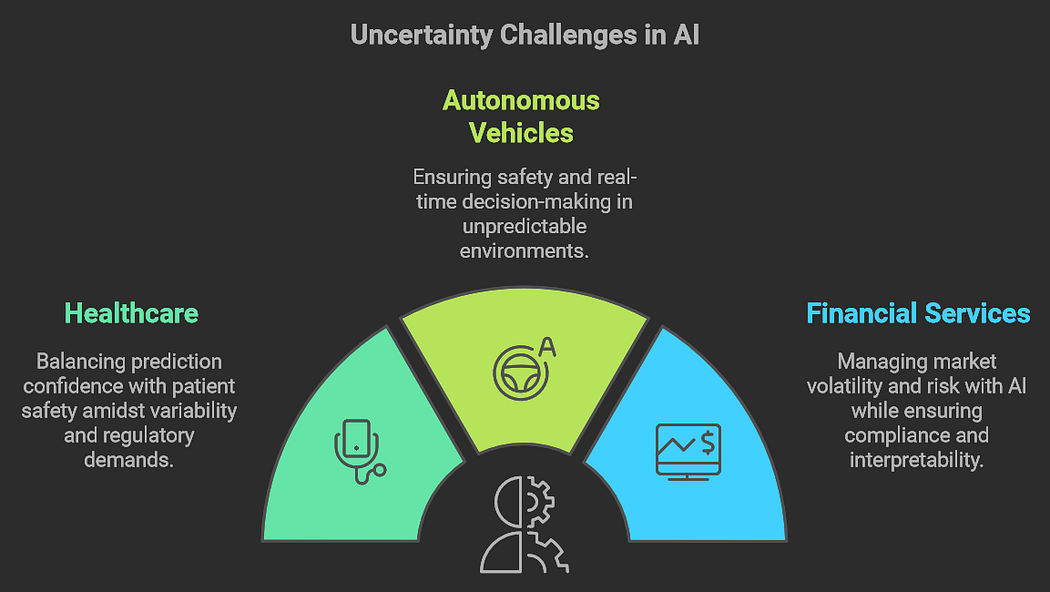
Real-world applications in healthcare autonomous vehicles and finance face unique uncertainty challenges

The Dual Nature of AI Uncertainty
AI systems encounter two fundamental types of uncertainty that significantly impact their performance and reliability. Understanding these distinctions proves crucial for developing effective management strategies.
Aleatoric Uncertainty: The Inherent Randomness
BCAlabs explains how aleatoric uncertainty emerges from natural randomness within data itself. Consider weather predictions — even perfect models cannot eliminate inherent variability in atmospheric conditions.
This randomness manifests through:
Sensor noise in data collection
Natural variations in observed phenomena
Random fluctuations in measured values
No amount of additional data can fully eliminate aleatoric uncertainty since it represents fundamental randomness rather than knowledge gaps.

Epistemic Uncertainty: The Knowledge Gap
In contrast researchers at Stanford highlight epistemic uncertainty arising from incomplete knowledge or limited data. This uncertainty decreases as systems gather more information and refine their understanding.
Key sources include:
Limited training datasets
Gaps in domain knowledge
Imperfect model architectures
Unlike aleatoric uncertainty epistemic uncertainty can be reduced through improved data collection and model refinement.

Critical Challenges in Modern AI Systems
The Data Quality Conundrum
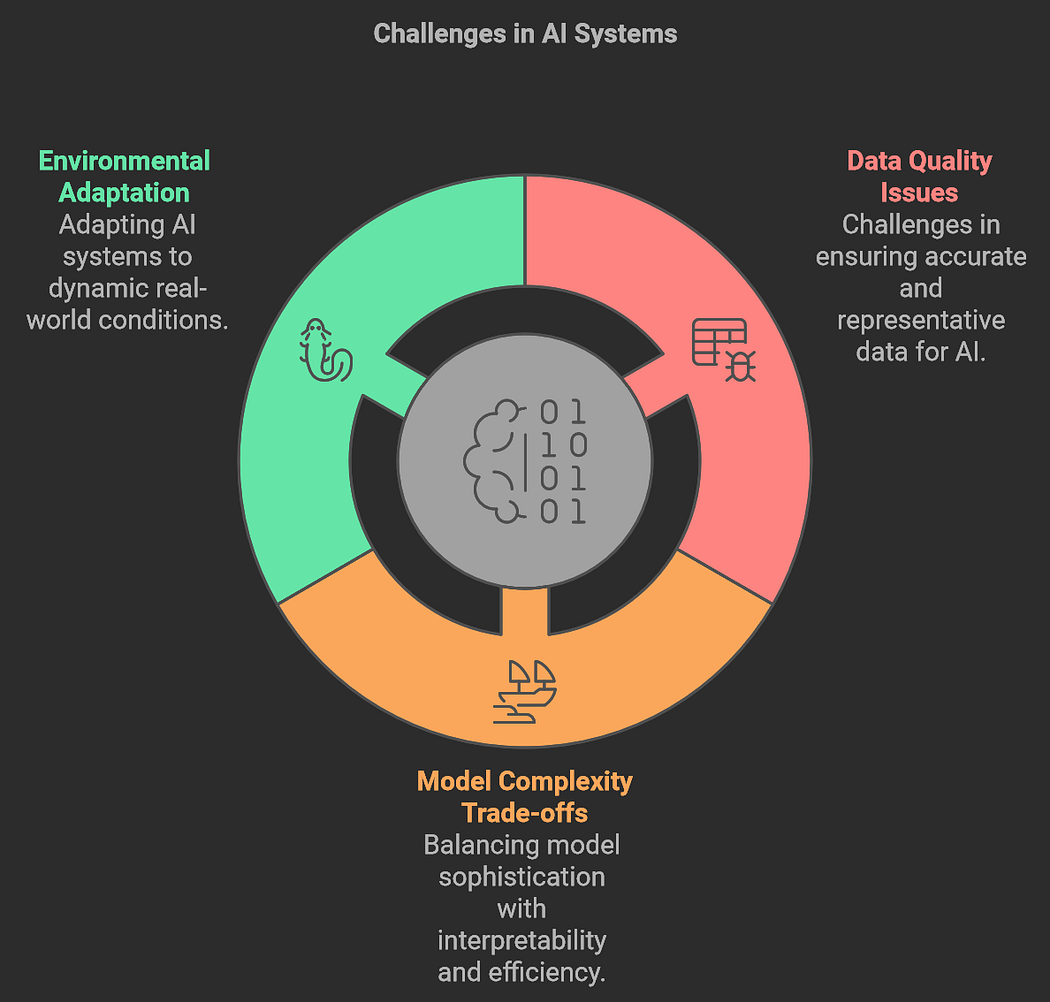
Recent studies from iMerit demonstrate how poor data quality dramatically impacts AI system reliability. Organizations face mounting pressure to ensure data accuracy completeness and representativeness.
Key data challenges include:
Insufficient sample sizes
Biased or unbalanced datasets
Missing or corrupted values
Noise and measurement errors
Model Complexity Trade-offs
Deepgram researchers highlight the delicate balance between model sophistication and interpretability. Complex models may capture subtle patterns but become increasingly opaque and difficult to validate.
This creates tension between:
Prediction accuracy
Model transparency
Computational efficiency
Implementation feasibility
Dynamic Environmental Adaptation
AI systems operating in real-world contexts face constantly evolving conditions. MDPI research shows how environmental changes can rapidly degrade model performance.
Critical factors include:
Shifting data distributions
Novel edge cases
Changing operational contexts
External disruptions

Industry-Specific Uncertainty Challenges
Healthcare: Where Stakes Run High
The healthcare sector exemplifies critical uncertainty management challenges. Medical AI applications must carefully balance prediction confidence with patient safety.
Key considerations include:
Individual patient variability
Limited historical data
Risk of adverse outcomes
Regulatory compliance
Autonomous Vehicles: Safety in Motion
Self-driving technology faces unique uncertainty challenges. Recent transportation studies highlight the need for robust uncertainty quantification in dynamic environments.
Critical aspects include:
Real-time decision making
Environmental unpredictability
Safety-critical operations
Multi-agent interactions
Financial Services: Managing Risk
The financial sector leverages AI for complex decision-making while managing substantial uncertainty. Research from AEI demonstrates how uncertainty affects market predictions and risk assessment.
Key challenges span:
Market volatility
Data quality verification
Regulatory compliance
Model interpretability
Strategies for Effective Uncertainty Management
Probabilistic Modeling Approaches
Advanced modeling techniques help quantify and manage uncertainty through:
Bayesian inference
Ensemble methods
Monte Carlo simulation
Confidence calibration
Interdisciplinary Collaboration
Success requires bringing together diverse expertise. Studies show effective uncertainty management benefits from:
Domain experts
Data scientists
Ethics specialists
Implementation engineers
Continuous Learning Systems
Adaptive approaches enable systems to:
Update knowledge bases
Refine uncertainty estimates
Improve decision making
Enhance reliability
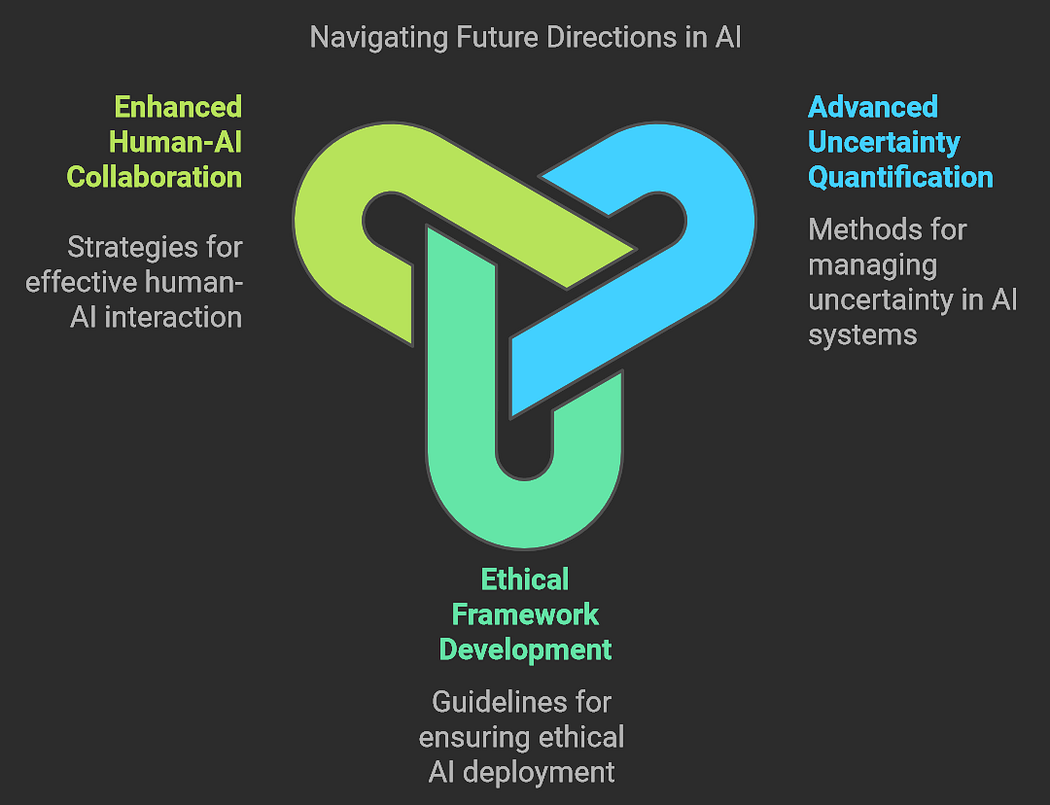
Future Directions and Emerging Solutions
Advanced Uncertainty Quantification
Cutting-edge research explores novel methods for:
Uncertainty decomposition
Confidence calibration
Robust optimization
Risk quantification
Ethical Framework Development
Policy research emphasizes the need for:
Fairness guidelines
Transparency requirements
Accountability measures
Safety protocols
Enhanced Human-AI Collaboration
Studies indicate successful uncertainty management requires:
Clear communication
Trust building
Shared responsibility
Continuous oversight
Related Videos
NEASQC webinar — Managing uncertainty in AI with Quantum Computing — 02/10/2024
What are the limitations and challenges of Artificial Intelligence?
Revolutionizing the Legal Industry with AI Overcoming Challenges and Success
Conclusion
Managing uncertainty in AI remains a complex multifaceted challenge requiring careful attention to technical ethical and operational considerations. Success demands robust frameworks combining probabilistic modeling interdisciplinary collaboration and continuous learning while maintaining focus on specific application domain requirements.
Organizations implementing AI systems must carefully balance the drive for enhanced capabilities against uncertainty management needs. Through structured approaches combining technical solutions with human oversight successful uncertainty management becomes achievable despite inherent challenges.
The future of AI uncertainty management lies in developing increasingly sophisticated yet practical approaches that enable reliable ethical and effective artificial intelligence applications across diverse domains.
🤖 Key Implementation Tips:
Start with thorough data quality assessment
Implement robust uncertainty quantification
Maintain clear communication channels
Establish continuous monitoring
Foster interdisciplinary collaboration
⚡ Warning Signs to Watch:
Overconfident predictions
Unexplained model behavior
Degrading performance
Stakeholder concerns
Compliance issues
This comprehensive overview demonstrates the complexity of managing uncertainty in AI while providing practical frameworks for addressing these challenges across various domains and applications.
So stay tuned for updates on these futures. And if you found this glimpse beyond the bleeding edge compelling, hit the follow and share buttons to help spread the word!
If you want to read more interesting content don’t forget to check on my blog.


