How Data Science and Machine Learning Are Revolutionizing Complex Prediction Problems

Picture yourself trying to forecast tomorrow’s weather without any instruments — just gut feeling and observation. Now fast forward to today where sophisticated algorithms process vast amounts of meteorological data to predict weather patterns with remarkable precision. This stark contrast illustrates how data science and machine learning revolutionize our approach to complex prediction problems.
The landscape of predictive analytics underwent dramatic transformation over recent years. Organizations now leverage artificial intelligence to extract actionable insights from massive datasets previously impossible to analyze manually.
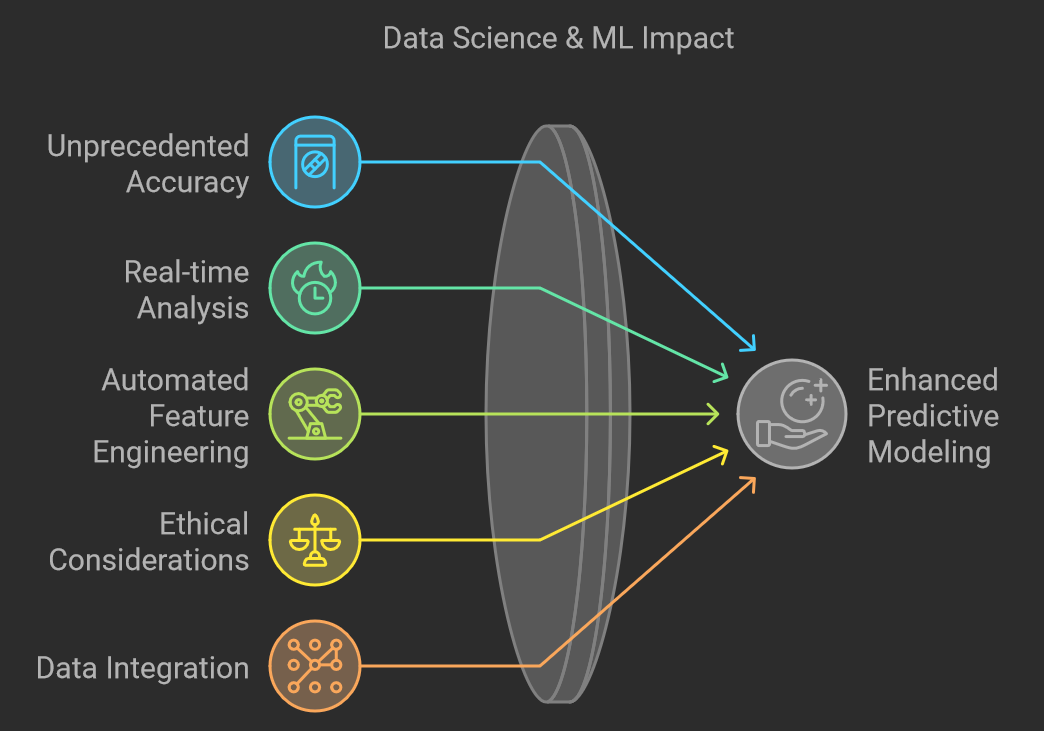
Key Takeaways:
Data science and ML enable unprecedented accuracy in predictive modeling across industries
Real-time analysis capabilities transform decision-making processes
Automated feature engineering and model building democratize advanced analytics
Ethical considerations and data quality remain crucial challenges
Integration of multiple data sources enables more comprehensive predictions
The Power of Integration: Data Science Meets Machine Learning
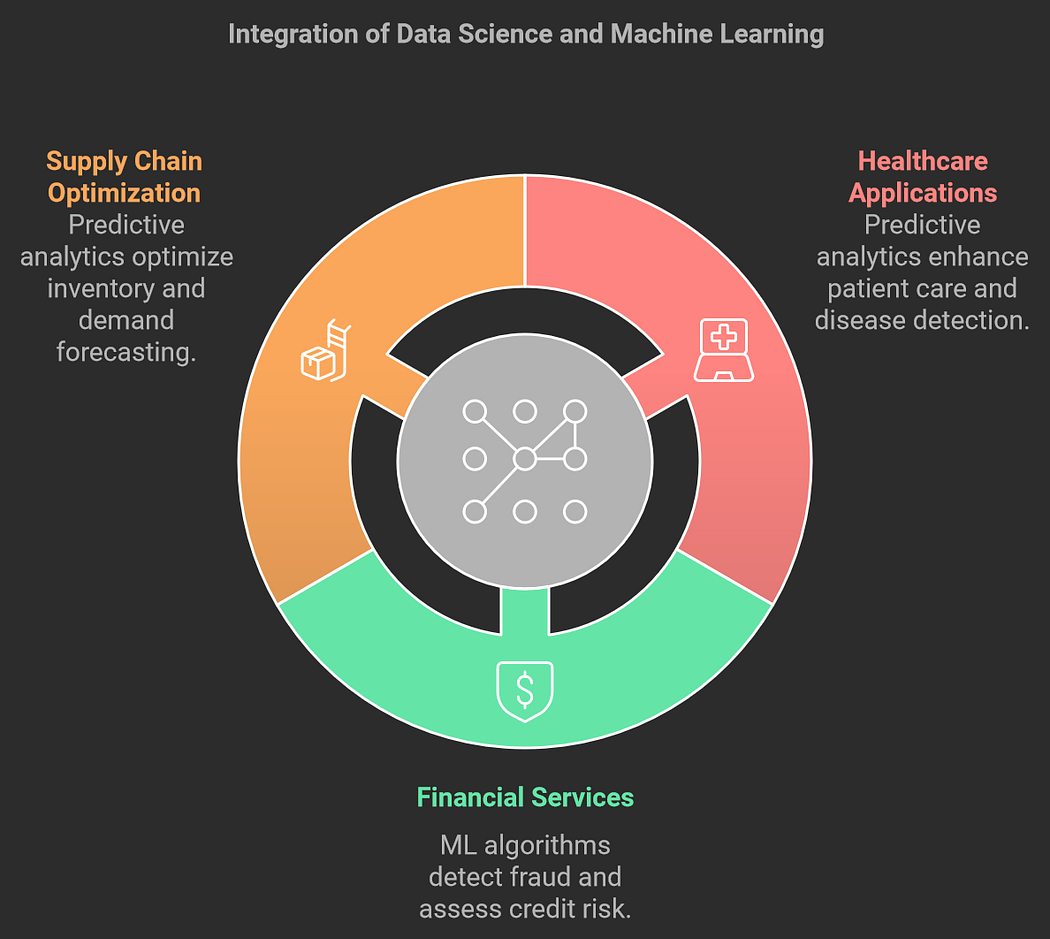
Enhanced Analytical Capabilities
Modern predictive modeling thrives on the synergy between data science methodologies and machine learning algorithms. Machine learning enables automated feature extraction from raw data reducing manual intervention requirements. This advancement proves particularly valuable when handling:
Unstructured text data
Image processing tasks
Audio analysis
Sensor readings
Social media feeds
Real-World Applications Transforming Industries

Healthcare Revolution 🏥
Medical professionals now utilize predictive analytics to enhance patient care through:
Early disease detection
Treatment outcome prediction
Patient readmission risk assessment
Resource allocation optimization
Personalized medicine recommendations
One groundbreaking example shows how machine learning models analyze medical imaging data to detect cancerous tumors at early stages with accuracy rates surpassing human specialists.
Financial Services Innovation 💹
The financial sector embraces predictive technologies for:
Fraud detection
Credit risk assessment
Market trend prediction
Portfolio optimization
Customer churn prevention
Banks implement real-time transaction monitoring systems powered by ML algorithms detecting suspicious activities instantly protecting millions of customers from fraud.

Supply Chain Optimization 🏭
Supply chain management transformed dramatically through predictive analytics enabling:
Inventory optimization
Demand forecasting
Route planning
Supplier risk assessment
Quality control automation
Automated Feature Engineering Revolution
Traditional data analysis required extensive manual feature engineering. Modern ML algorithms automatically extract relevant features from raw data revolutionizing the analysis process. Deep learning networks particularly excel at discovering complex patterns within unstructured data.
Advanced Modeling Techniques Reshaping Predictions
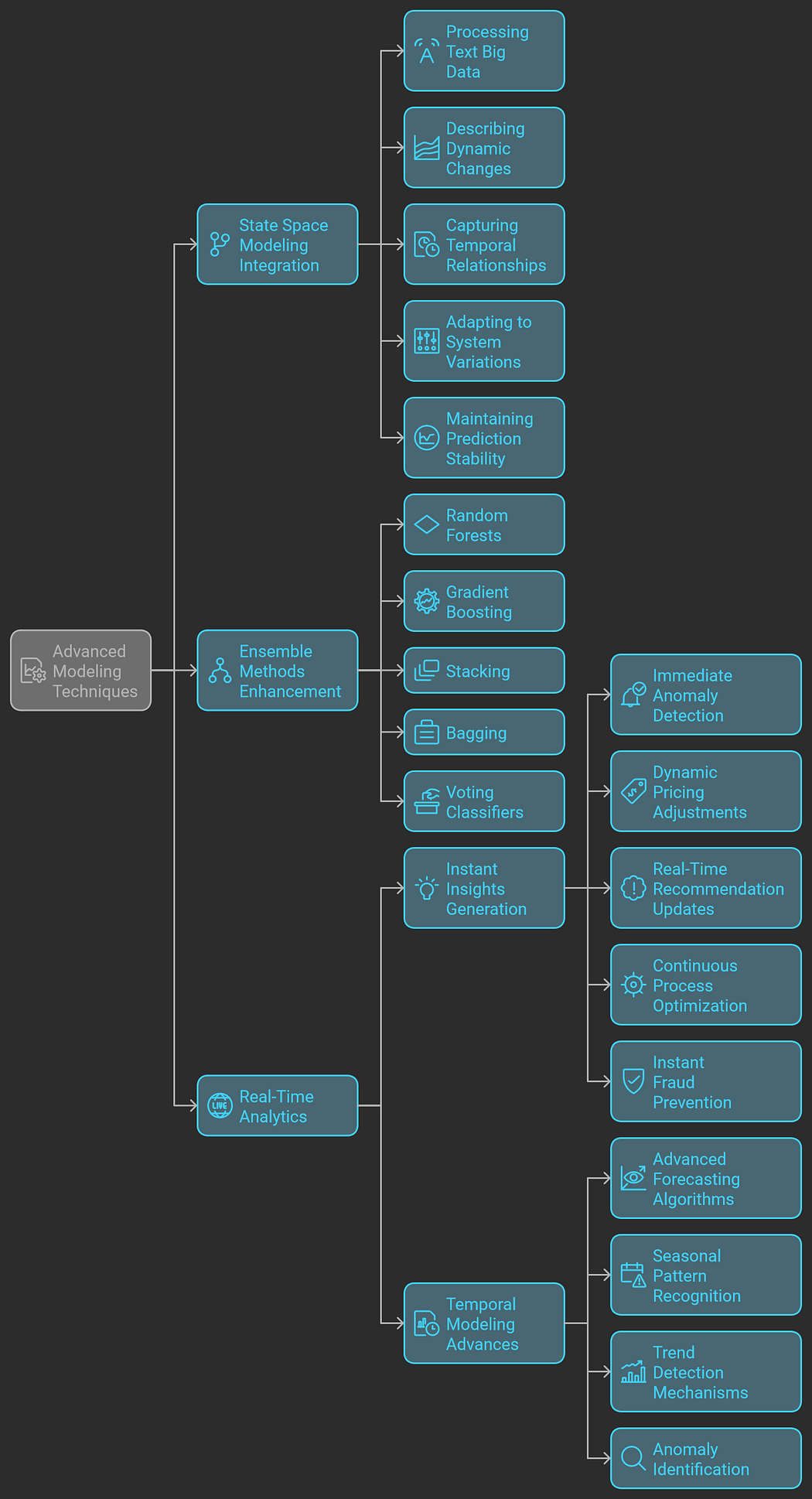
State Space Modeling Integration
Recent developments in state space-based Transformer models revolutionize complex system predictions. These models excel at:
Processing text big data
Describing dynamic changes
Capturing temporal relationships
Adapting to system variations
Maintaining prediction stability
Ensemble Methods Enhancement
Multiple model integration through ensemble methods delivers superior performance compared to single models. Popular techniques include:
Random Forests
Gradient Boosting
Stacking
Bagging
Voting Classifiers
Real-Time Analytics Transform Decision Making
Instant Insights Generation
Modern systems process streaming data instantaneously enabling:
Immediate anomaly detection
Dynamic pricing adjustments
Real-time recommendation updates
Continuous process optimization
Instant fraud prevention
Temporal Modeling Advances
Time series analysis capabilities evolved significantly through:
Advanced forecasting algorithms
Seasonal pattern recognition
Trend detection mechanisms
Anomaly identification
Change point detection

Industry-Specific Transformations
Healthcare Analytics 🏥
Medical institutions leverage predictive technologies for:
Disease outbreak prediction
Resource allocation optimization
Treatment outcome forecasting
Patient risk stratification
Drug development acceleration
Financial Market Innovation
Complex market dynamics analysis enables:
Market trend prediction
Risk assessment
Portfolio optimization
Trading strategy automation
Economic forecasting
Environmental Monitoring 🌍
Climate prediction capabilities advance through:
Weather pattern analysis
Natural disaster prediction
Climate change modeling
Resource consumption forecasting
Environmental impact assessment
Challenges and Considerations
Some of the challenges to be faced are listed below:
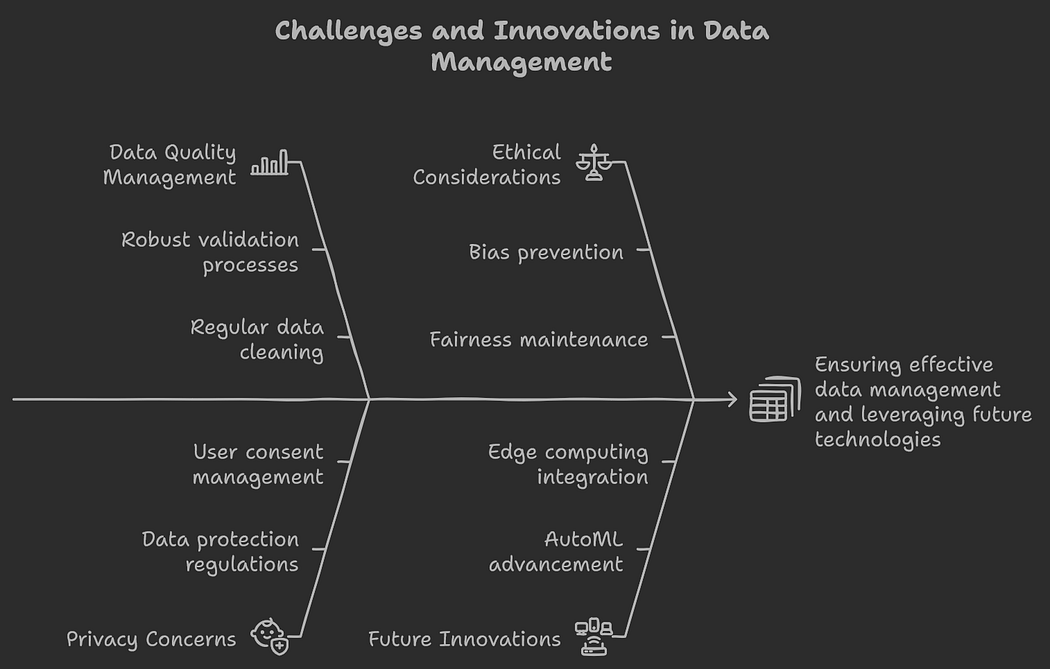
Data Quality Management
Success depends heavily on data quality requiring:
Robust validation processes
Regular data cleaning
Standardization procedures
Quality monitoring systems
Data governance frameworks
Privacy Concerns
Organizations must address:
Data protection regulations
User consent management
Security protocols
Access control systems
Audit procedures
Ethical Considerations
Important ethical aspects include:
Bias prevention
Fairness maintenance
Transparency promotion
Accountability establishment
Social impact assessment

Future Directions and Innovations
AutoML Advancement
Automated machine learning platforms democratize data science through:
Automated model selection
Hyperparameter optimization
Feature engineering automation
Model deployment streamlining
Performance monitoring
Edge Computing Integration
Distributed processing enables:
Local data processing
Reduced latency
Enhanced privacy
Improved reliability
Resource optimization
Quantum Computing Potential
Future quantum systems promise:
Complex optimization enhancement
Cryptography advancement
Simulation improvement
Pattern recognition acceleration
Drug discovery optimization

Best Practices for Implementation
Data Preparation Guidelines
Ensure success through:
Comprehensive data cleaning
Proper feature engineering
Robust validation procedures
Regular quality checks
Documentation maintenance
Model Selection Criteria
Consider these factors:
Problem complexity
Data availability
Resource constraints
Performance requirements
Interpretability needs
Deployment Strategies
Implement effectively through:
Gradual rollout
Continuous monitoring
Regular updates
Performance optimization
User feedback integration
Impact Measurement and ROI
Performance Metrics
Track success using:
Prediction accuracy
Processing speed
Resource utilization
Cost efficiency
User satisfaction
Business Value Assessment
Measure impact through:
Revenue increase
Cost reduction
Process optimization
Customer satisfaction
Market competitiveness
Further References
Machine Learning for Data Science & AI
Data Analytics vs Data Science
Artificial Intelligence vs Machine Learning vs Deep Learning
Infography
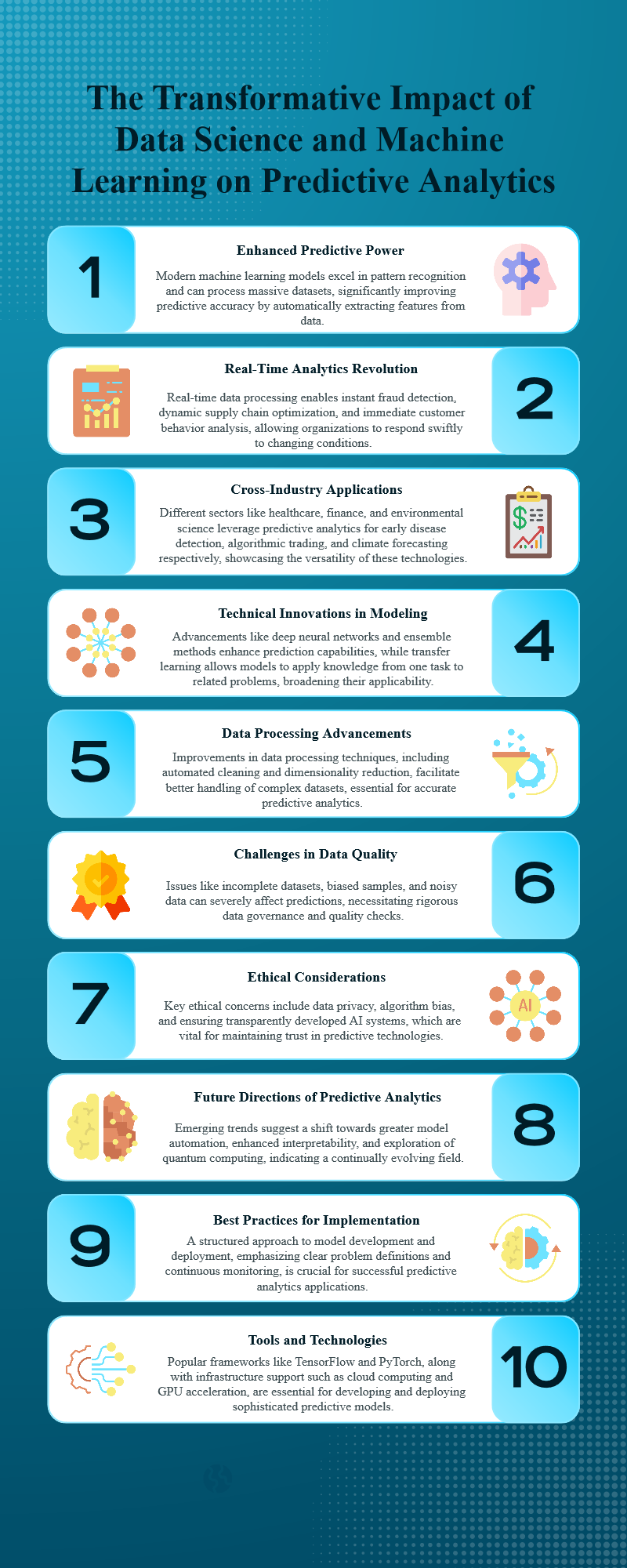
Conclusion
Data science and machine learning revolutionize complex prediction problems through unprecedented accuracy automated feature engineering and real-time analysis capabilities. Organizations leveraging these technologies gain competitive advantages through improved decision-making enhanced operational efficiency and innovation acceleration.
Success requires careful attention to data quality ethical considerations and implementation best practices. Continuous advancement in AutoML edge computing and quantum processing promises even greater capabilities ahead.
The future holds exciting possibilities as these technologies evolve enabling more sophisticated predictions across industries. Organizations embracing these innovations position themselves at the forefront of their respective fields ready to tackle increasingly complex challenges through data-driven decision-making.
Key Success Factors:
Quality data management
Robust infrastructure
Skilled personnel
Ethical framework
Continuous improvement
Remember: The journey toward advanced predictive capabilities requires commitment patience and adaptability. Success comes through careful planning proper implementation and continuous optimization of these powerful technologies.
So stay tuned for updates on these futures. And if you found this glimpse beyond the bleeding edge compelling, hit follow / subscribe buttons to help spread the word!
If you want to read more interesting content don’t forget to check on my blog.


